
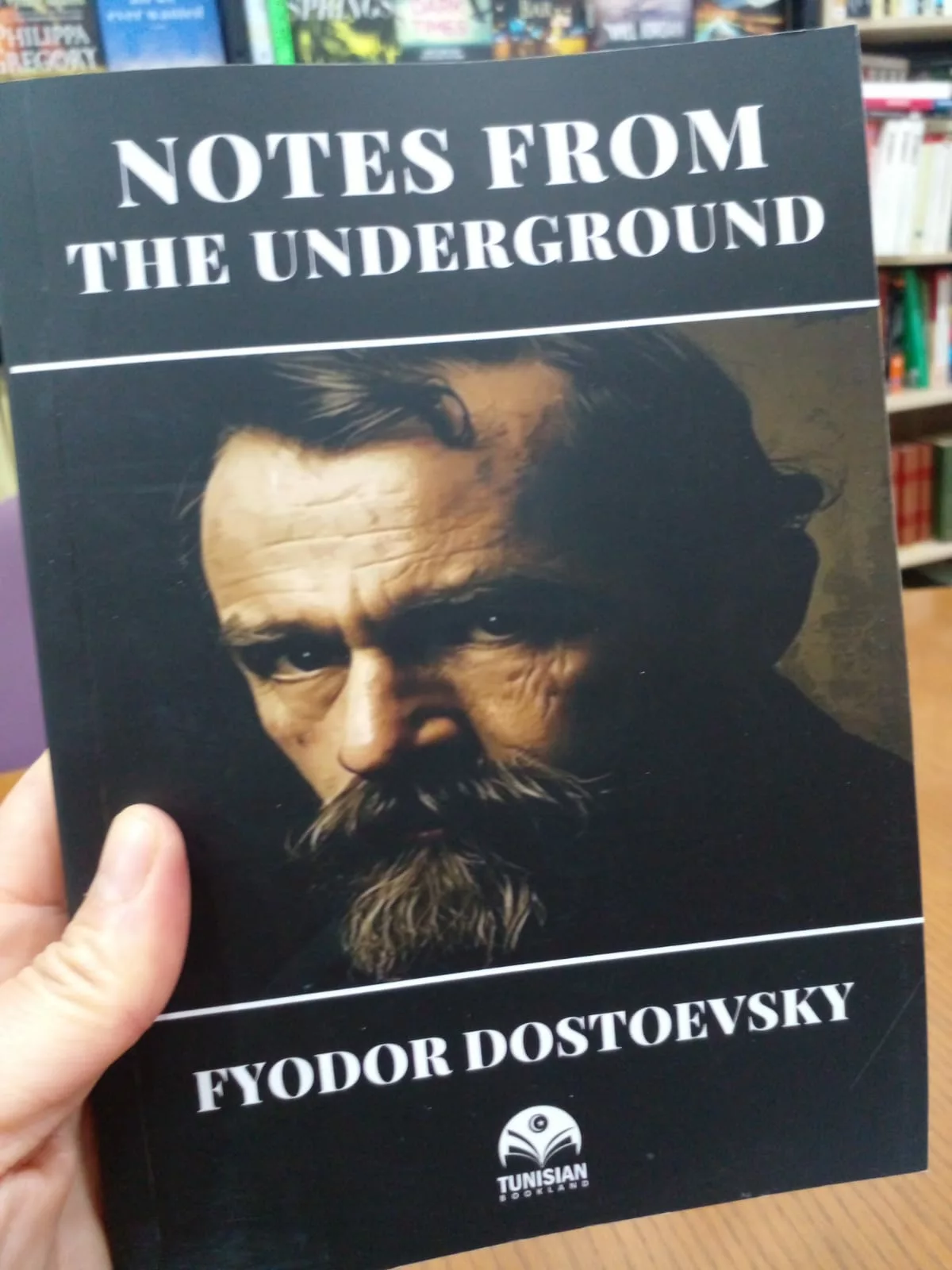
Notes from Underground
Notes from Underground by Fyodor Dostoevsky In the depths of St. Petersburg, a nameless man lives in bitter isolation, fueled by irony, resentment, and a relentless war against both society and himself. From his cramped room, he delivers fierce confessions…
4 en stock

-
Achetez ce livre, préservez la nature : chaque achat compte.
-
Votre achat responsable garantit un futur meilleur pour notre planète.
4 en stock
Notes from Underground by Fyodor Dostoevsky
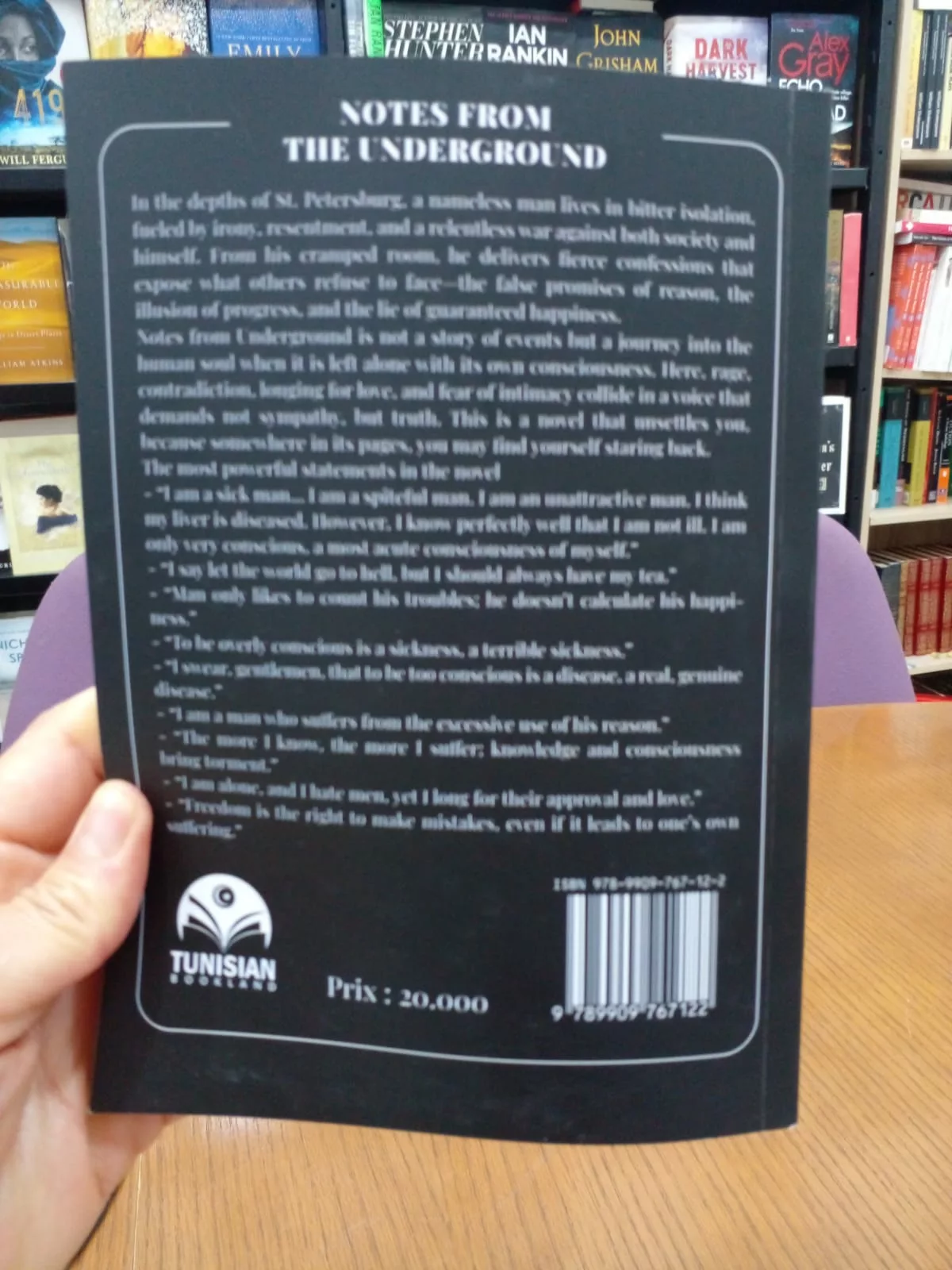
In the depths of St. Petersburg, a nameless man lives in bitter isolation, fueled by irony, resentment, and a relentless war against both society and himself. From his cramped room, he delivers fierce confessions that expose what others refuse to face—the false promises of reason, the illusion of progress, and the lie of guaranteed happiness.
Notes from Underground is not a story of events but a journey into the human soul when it is left alone with its own consciousness. Here, rage, contradiction, longing for love, and fear of intimacy collide in a voice that demands not sympathy, but truth. This is a novel that unsettles you, because somewhere in its pages, you may find yourself staring back.
The most powerful statements in the novel
- “I am a sick man… I am a spiteful man. I am an unattractive man. I think my liver is diseased. However, I know perfectly well that I am not ill. I am only very conscious, a most acute consciousness of myself.”
– “I say let the world go to hell, but I should always have my tea.”
– “Man only likes to count his troubles; he doesn’t calculate his happiness.”
– “To be overly conscious is a sickness, a terrible sickness.”
– “I swear, gentlemen, that to be too conscious is a disease, a real, genuine disease.”
– “I am a man who suffers from the excessive use of his reason.”
– “The more I know, the more I suffer; knowledge and consciousness bring torment.”
– “I am alone, and I hate men, yet I long for their approval and love.”
– “Freedom is the right to make mistakes, even if it leads to one’s own suffering.”
– “I am my own enemy, my own torturer, and my own witness.”
evsky’s most revolutionary novel, Notes from Underground marks the dividing line between nineteenth- and twentieth-century fiction, and between the visions of self each century embodied. One of the most remarkable characters in literature, the unnamed narrator is a former official who has defiantly withdrawn into an underground existence. In complete retreat from society, he scrawls a passionate, obsessive, self-contradictory narrative that serves as a devastating attack on social utopianism and an assertion of man’s essentially irrational nature.
Richard Pevear and Larissa Volokhonsky, whose Dostoevsky translations have become the standard, give us a brilliantly faithful edition of this classic novel, conveying all the tragedy and tormented comedy of the original.
| Date de parution | 2026 |
|---|---|
| Langue | Anglais |
| Nombre de pages | 156 |
| État | Neuf |
| Format | Broché |
| Défaut | Aucun défaut |
| ISBN-13 | 978-9-9097-6712-2 |
| ISBN-10 | 9-9097-6712-0 |
You must be logged in to post a review.
Informations sur la boutique
- Nom de la Librairie: Tunisian Bookland
- Vendeur: Tunisian Bookland
- Aucune évaluation pour l'instant !






Avis
Il n'y a pas encore d'avis.