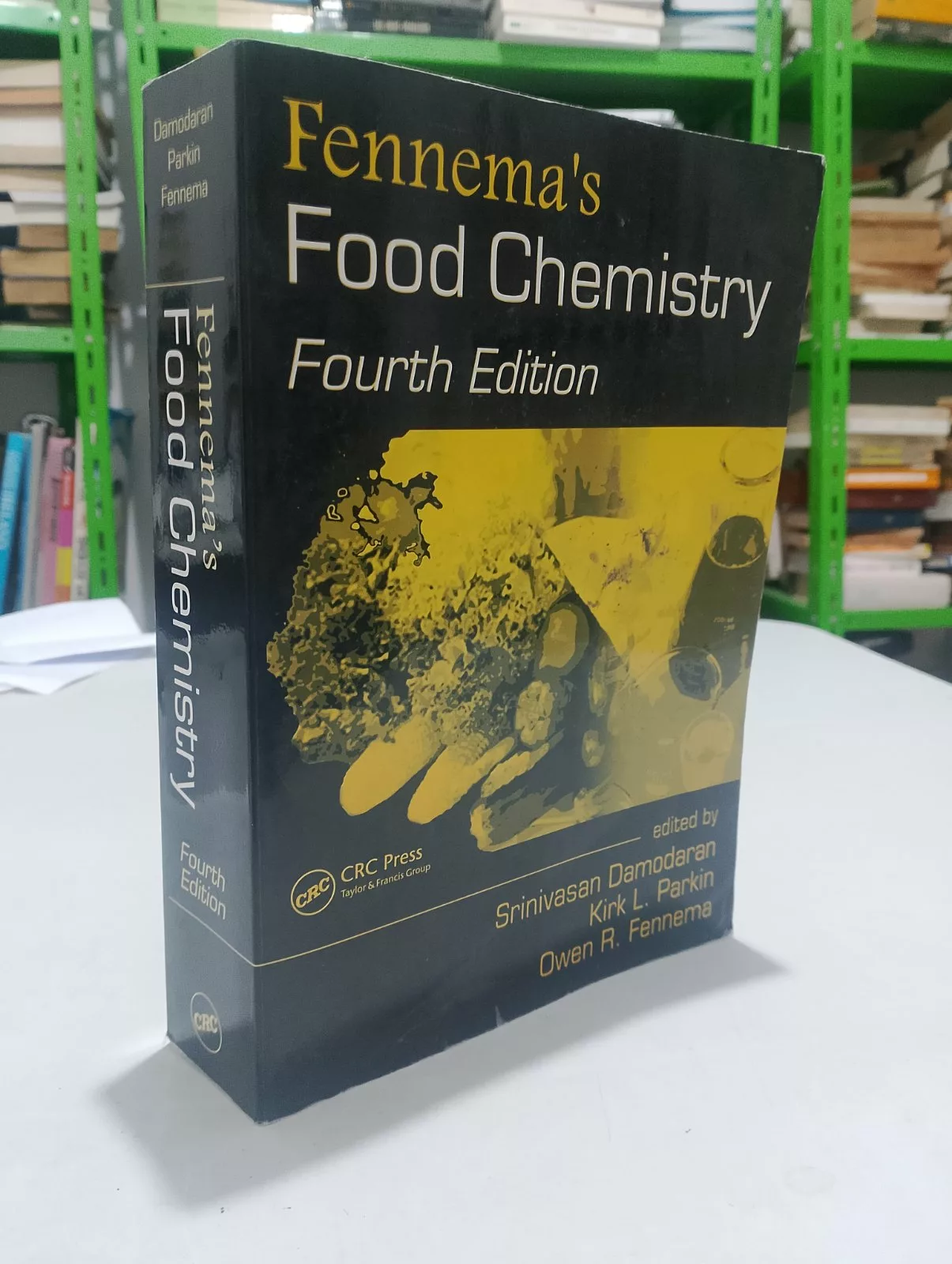
Fennema's Food Chemistry
de Kirk L. Parkin, Owen R. Fennema · CRC Press/Taylor & Francis
120.00 TNDExemplaire unique
Commander maintenant
En achetant ce livre, vous évitez
≈ 1,26 kg de CO₂ évités
360 L d’eau économisés
144 feuilles A4 épargnées
1/82 d’arbre préservé
Calculé pour ce livre (1 204 g) avec la méthode de notre compteur d’impact, livraison comprise.
Paiement à la livraison
en espèces
Livré en 2 à 5 jours
partout en Tunisie
Vendu par


Niveau 5 sur 5Bibliothèque vivante
7 trophées sur 12 Premier livre
 Première vente
 Œil d’expert
 Série de 3
 Transparence totale
 Libraire confirmé
- +1autres
Résumé
This latest edition of the most internationally respected reference in food chemistry for more than 30 years, Fennema’s Food Chemistry once again meets and surpasses the standards of quality, comprehensive information set by its predecessors. This edition introduces new editors and contributors, who are recognized experts in their fields. All chapters reflect recent scientific advances and, where appropriate, have expanded and evolved their focus to provide readers with the current state-of-the-science of chemistry for the food industry.
The fourth edition presents an entirely new chapter, Impact of Biotechnology on Food Supply and Quality, which examines the latest research in biotechnology and molecular interactions. Two former chapters receive extensive attention in the new edition including Physical and Chemical Interactions of Components in Food Systems (formerly “Summary: Integrative Concepts”) and Bioactive Substances: Nutraceuticals and Toxicants (formerly “Toxic Substances”), which highlights bioactive agents and their role in human health and represents the feverish study of the connection between food and health undertaken over the last decade. It discusses bioactive substances from both a regulatory and health standpoint.
Retaining the straightforward organization and detailed, accessible style of the original, this edition begins with an examination of major food components such as water, carbohydrates, lipids, proteins, and enzymes. The second section looks at minor food components including vitamins and minerals, colorants, flavor, and additives. The final section considers food systems by reviewing basic considerations as well as specific information on the characteristics of milk and the postmortem physiology of edible muscle and postharvest physiology of plant tissues. Useful appendices provide keys to the international system of units, conversion factors, log P values calculation, and the Greek alphabet.
Fiche du livre
- État
- Bon état
- Défaut
- Légères traces d’usage
- Langue
- Anglais
- Format
- Broché
- Poids
- 1.204 kg
- Dimensions
- 20.3 × 13.3 × 7.1 cm
- Éditeur
- CRC Press/Taylor & Francis