
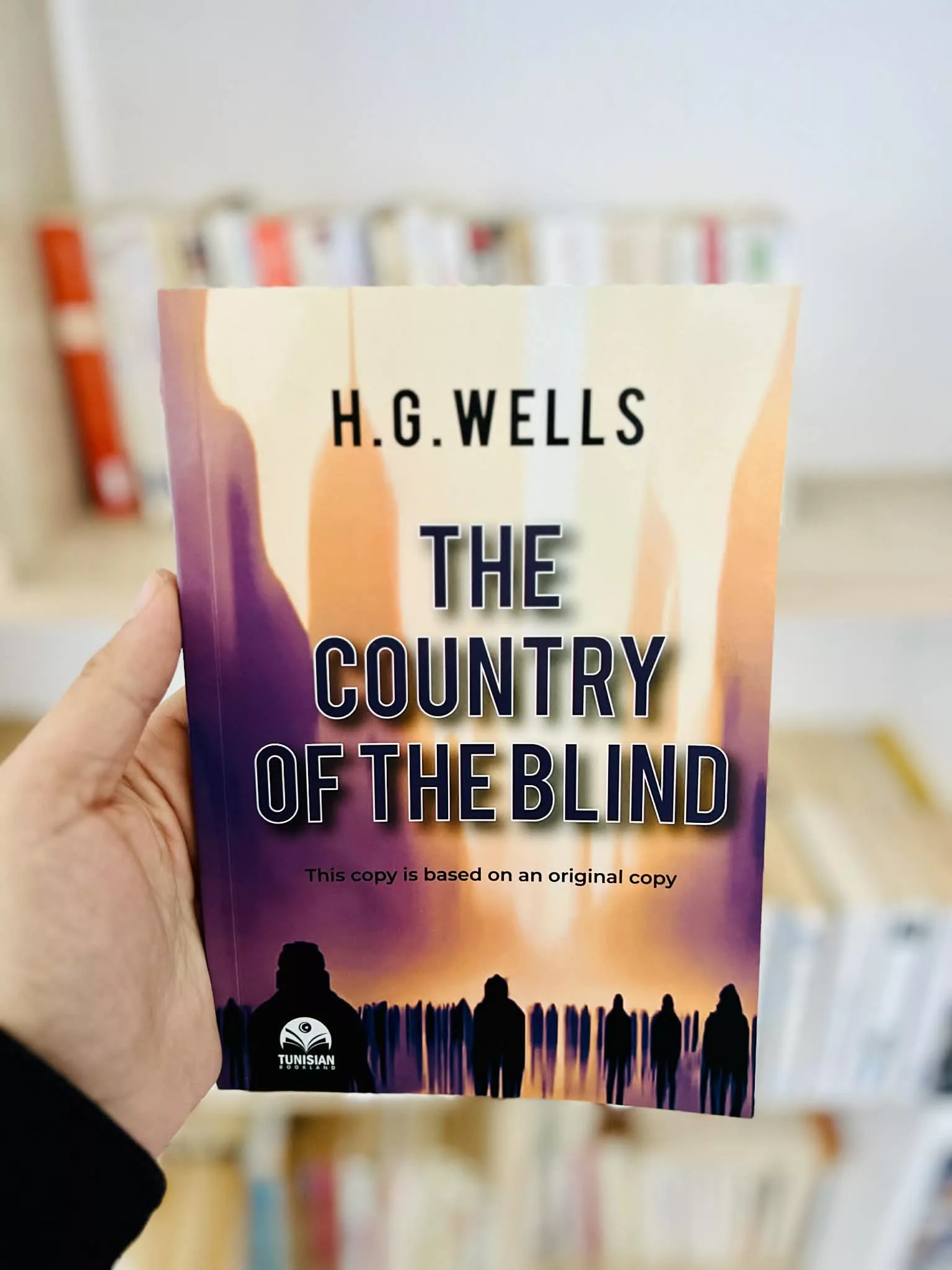
The Country of the Blind
The Country of the Blind by H.G. Wells
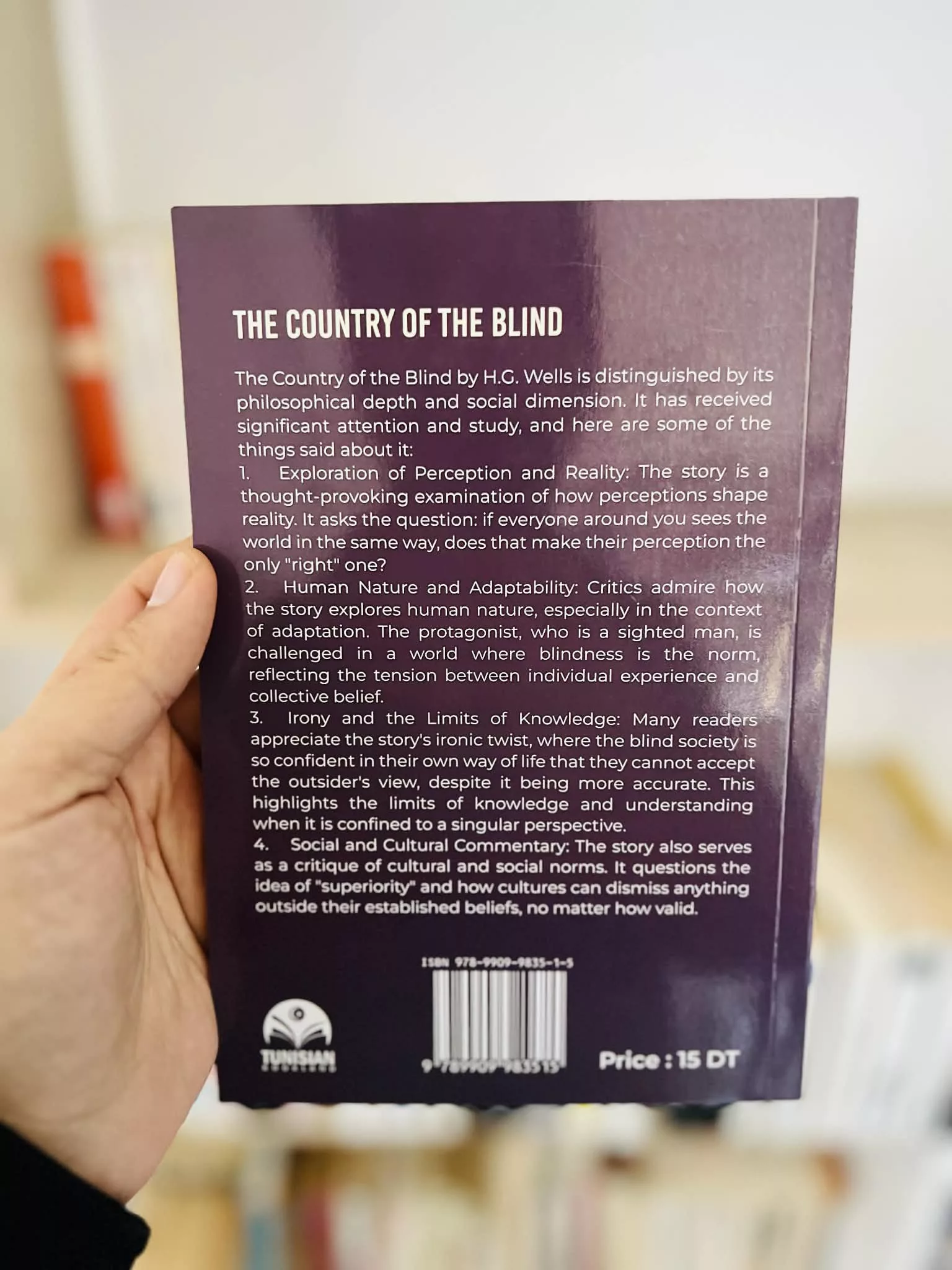
The Country of the Blind by H.G. Wells is distinguished by its philosophical depth and social dimension. It has received significant attention and study, and here are some of the things said about it:
1. Exploration of Perception and Reality: The story is a thought-provoking examination of how perceptions shape reality. It asks the question: if everyone around you sees the world in the same way, does that make their perception the only “right” one?
2. Human Nature and Adaptability: Critics admire how the story explores human nature, especially in the context of adaptation. The protagonist, who is a sighted man, is challenged in a world where blindness is the norm, reflecting the tension between individual experience and collective belief. Irony and the Limits of Knowledge: Many readers appreciate the story’s ironic twist, where the blind society is so confident in their own way of life that they cannot accept the outsider’s view, despite it being more accurate.
2 en stock

-
Achetez ce livre, préservez la nature : chaque achat compte.
-
Votre achat responsable garantit un futur meilleur pour notre planète.
2 en stock
The Country of the Blind by H.G. Wells
The Country of the Blind by H.G. Wells is distinguished by its philosophical depth and social dimension. It has received significant attention and study, and here are some of the things said about it:
1. Exploration of Perception and Reality: The story is a thought-provoking examination of how perceptions shape reality. It asks the question: if everyone around you sees the world in the same way, does that make their perception the only “right” one?
2. Human Nature and Adaptability: Critics admire how the story explores human nature, especially in the context of adaptation. The protagonist, who is a sighted man, is challenged in a world where blindness is the norm, reflecting the tension between individual experience and collective belief. Irony and the Limits of Knowledge: Many readers appreciate the story’s ironic twist, where the blind society is so confident in their own way of life that they cannot accept the outsider’s view, despite it being more accurate.
This highlights the limits of knowledge and understanding when it is confined to a singular perspective. Social and Cultural Commentary: The story also serves as a critique of cultural and social norms. It questions the idea of “superiority” and how cultures can dismiss anything outside their established beliefs, no matter how valid.
| Date de parution | 2025 |
|---|---|
| Édition | Tunisian Bookland |
| État | Neuf |
| Format | Broché |
| ISBN | 9789909983515 |
| Langue | Anglais |
| Nombre de pages | 89 |
You must be logged in to post a review.
Informations sur la boutique
- Nom de la Librairie: Tunisian Bookland
- Vendeur: Tunisian Bookland
-
Adresse :
1 rue jemaa ezitouna tunis bab bahar
tunis
Tunis City - Aucune évaluation pour l'instant !




Avis
Il n'y a pas encore d'avis.